
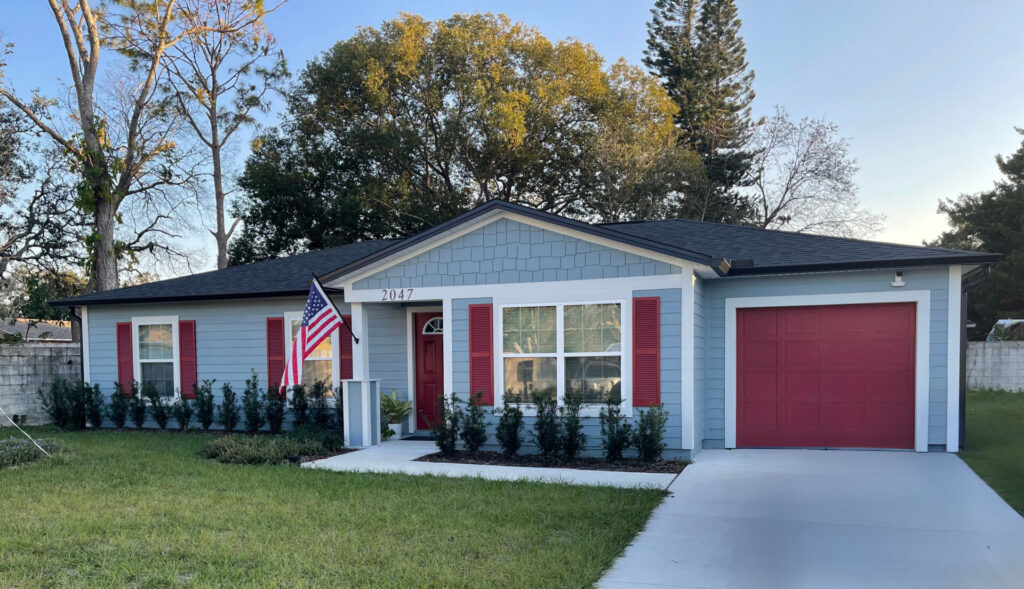
What do you picture when you hear “The American Dream”? For many Americans, the image of a single-family home behind a white picket fence, sitting on a well-kept green lawn with a blooming flower bed out front, comes to mind. There also might be the thought of a well-paved driveway with a reliable car next to the house. But this concept represents so much more than just a standard house; it symbolizes the shared belief that stability, financial security, independence, and success is possible for anyone, regardless of their background. Since the nation’s founding in 1776, the desire to own a home has spread throughout Americans, leading 65.7% of citizens to own their own home by the end of 2025.
The concept of homeownership was not always a reachable reality for Americans with rates reaching a “low of 43.6% by 1940.” Although homeownership rates have fluctuated throughout American history, homebuying policies and practices have evolved with the historical events that shaped those outcomes. Let’s take a look at the most impactful moments in America’s homeownership history:
1800s

On May 10, 1869, The Transcontinental Railroad was completed, giving people access to underdeveloped areas of the country and sparking the expansion of housing and community development across the country. The growth of industrial transportation and the new access it granted also allowed people the ability to travel in and out of urban areas more fluidly, eventually inspiring the growth of suburban areas around cities.
This industrialization led to a 92 percent population growth rate in the late 1800s, as “many rural residents moved to cities seeking economic opportunity in new industries and factories.” The influx of people to major cities spurred the development of multifamily homes, rental units, and eventually tenement housing for lower class workers.
1900s
The introduction of the Federal Home Loan Bank Act and the formation of the Federal Home Loan Bank Board and twelve regional banks were all created in 1932 in response to poorly developed housing finance institutions leading to unsuccessful and unattainable homeownership. This legislation aimed to “provide funding and liquidity support to housing finance institutions.”
One year later, in 1933, the Home Owners’ Loan Act and Home Owners’ Loan Corporation (HOLC) were introduced, leading to the development of long-term, fixed-rate mortgages that self-amortized over 20 years (later expanded to 30 years).” In addition, the National Housing Act created the Federal Housing Administration (FHA) in 1934, futher supporting the restructuring of home loans and the use of fixed-rate, long-term mortgages. These practices fully transformed how homes are financed, and they are still used in the housing market today.
A turning point occurred when the Housing Act of 1937 was passed, becoming the “first permanent federal program for building and subsidizing housing for low-income families in the United States,” making homeownership attainable for the lower classes as well. $500 million in bonds were granted by the United States Housing Authority to fun construction projects. However, the law also “required the demolition of slum housing for every new unit built, tying affordable housing construction directly to urban renewal,” which quickly became known for gentrifying lower-class neighborhoods of color, renewing them for farer-skinned benefit. Revisions to the act were later introduced to prevent this discrimination and other inequalities; however, the changes could not undo the damage that had been done to the lower-class neighborhoods.
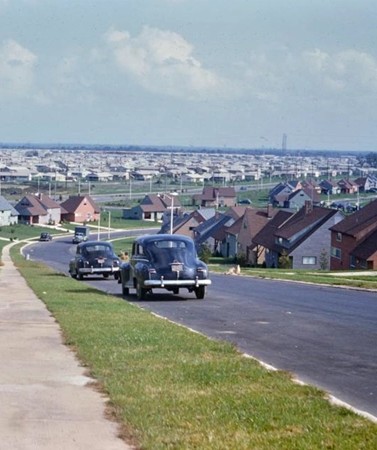

As American soldiers returned from World War II, unemployment and unhoused rates increased, leading the United States Congress to pass the Servicemen’s Readjustment Act of 1944, also known as the G.I. Bill. This act “authorized low-interest loans to returning service members to help them start businesses or farms or pursue secondary education, and it also gave the Veterans Administration the authority to underwrite mortgages.” The G.I. Bill led to a rapidly growing middle class, which decreased economic inequality, making homeownership more attainable for most Americans. This new access led to a spike in homeownership rates, with the percentage rising from 43.6 to 61.9 between 1940 and 1960, allowing the majority of citizens to fulfill the American Dream.
On July 2, 1964, the Civil Rights Act was signed into effect by President Lyndon Johnson, signifying the political and social fight for equality. Then, in 1968, amendments were made, prohibiting “discrimination concerning the sale, rental, and financing of housing based on race, religion, national origin, sex, (and as amended) handicap and family status,” furthering the push for equality for all in the housing market. That same year the Fair Housing Act was also passed, which influences all housing policies to this day, providing federal and state protections for individuals in an effort to ensure all receive fair housing opportunities.

On September 9, 1965, The United States Department of Housing and Urban Development (HUD) was formed to assist the federal government in addressing national housing issues. HUD to provide and improve homeownership, public and assisted housing, affordable housing, Native American housing, community developments, and unhoused initiatives. The department had a large impact on housing initiatives and still works to assist citizens in efforts to achieve the American Dream today.
Until 1974, women were still forced to depend on men in their life, whether that was a father, brother, uncle, or other male figure, for any financial endeavors because women were not allowed to build credit. If you wanted a credit card, it would be in your husband’s name, and he was the only one able to build credit. If you wanted to apply for a loan, a man needed to sign for it, because even if you had the money and were responsible, you were not allowed to grow your own credit. In an effort to curb this dependency, the Equal Credit Opportunity Act (ECOA) was passed on October 28, 1974, “making it illegal for banks to discriminate in lending based on sex or marital status.” This was groundbreaking for single mothers, widows, and women across the nation as it granted them more freedom, independency, and agency in their success and dreams.


Habitat for Humanity was officially founded in 1976 by the Fuller Family, but before the organization, there was a vision within one community. Clarence Jordan, a farmer and biblical scholar, realized there were people in his community who did not have access to “adequate shelter.” With the help of Millard and Linda Fuller, Jordan developed the concept of “partnership housing,” which encouraged local volunteers to work side-by-side with future homeowners to build decent and affordable housing. The community was able to fund these projects through a “Fund for Humanity,” which combined interest-free loans from supporters with fundraised money to lower the cost of the home for the buyer.
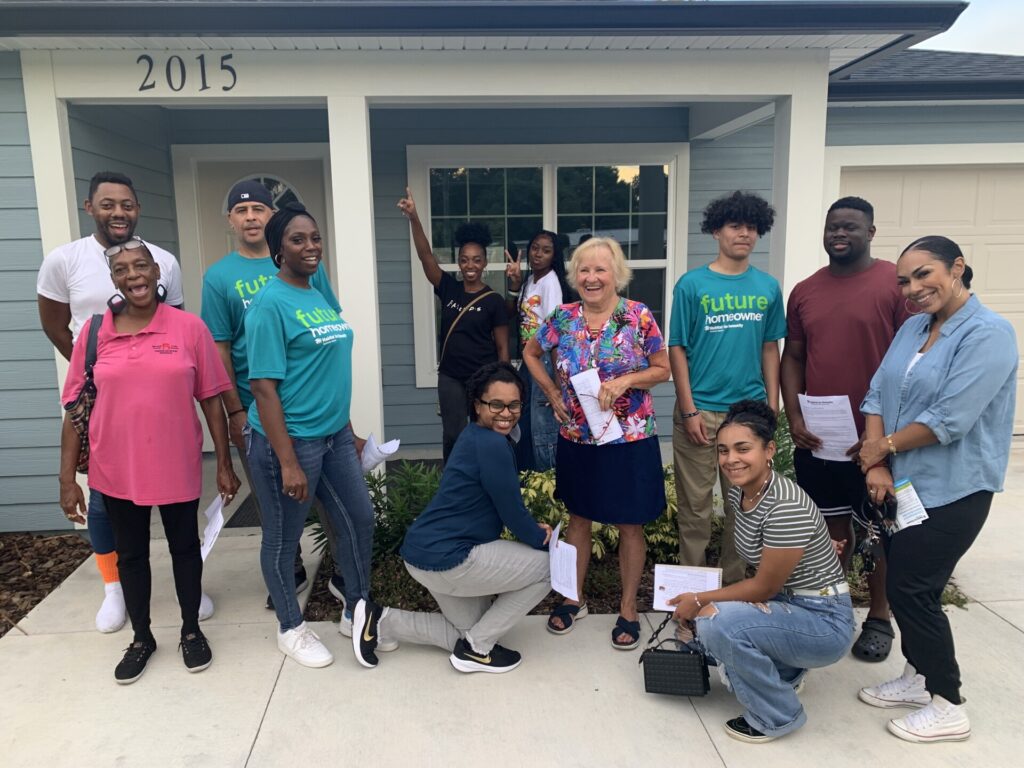
The same concept is used in affiliates across the nation today, including at Habitat for Humanity of Seminole County and Greater Apopka, which was founded in Lonwood, Florida in 1991.The affiliate is now one of the top 50 affiliates across the nation helping to provide safe, decent, and affordable housing to hard-working families in their community.
2000s
After observing the United States market crash in September 2008, and the nation’s poor financial conditions leading up to the event, Treasury Secretary Timothy Geithner issued a reform plan known today as the Dodd-Frank Wall Street Reform and Consumer Protection Act. This plan assisted the House and Senate in restabilizing the nation’s economy, making changes to bank regulations, so failures were less likely to occur. The act also established new mortgage standards addressing the foreclosure crisis caused by unfair lending practices within the housing market. This act remains to serve as the foundation for financial regulation in the United States today, influencing modern housing market practices.
Where We Are Today
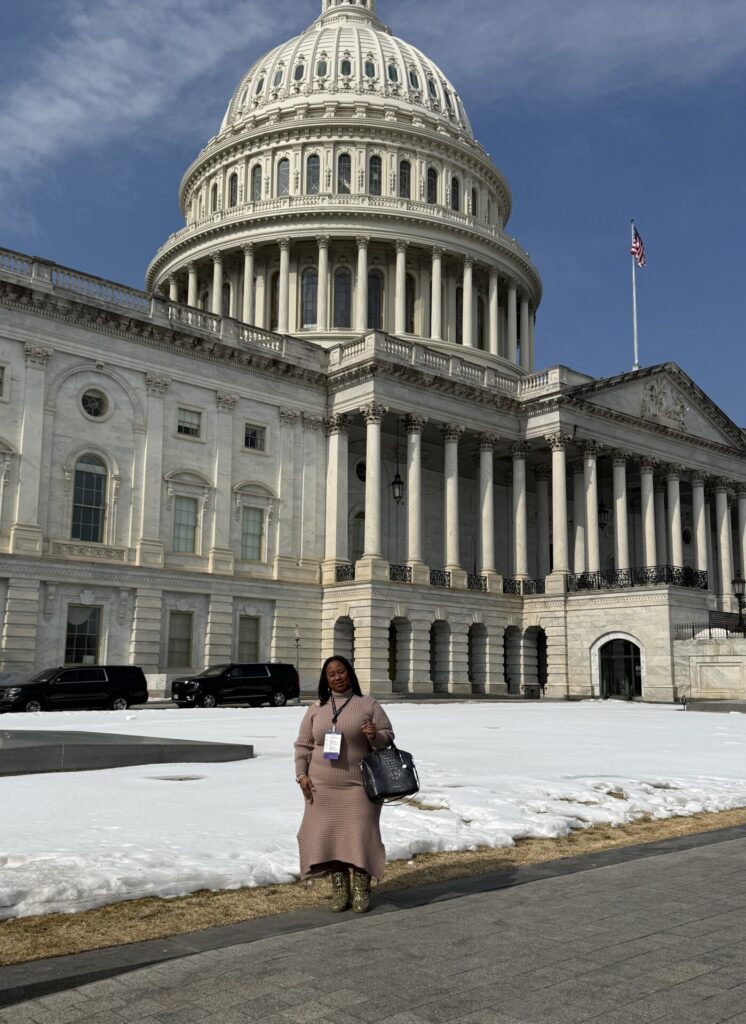
As a nation, housing policy has progressed significantly since the founding in 1776; however, there are still many causes in need of active attention. In 2025, HUD reported that 8.46 million households in the United States are considered “worst case housing needs,” meaning these families face “very low incomes who do not receive government housing assistance and pay more than one-half of their incomes toward rent, those who live in severely inadequate conditions, or both.” While this number is daunting, organizations like Habitat for Humanity Seminole-Apopka are working in conjunction with departments like HUD to ensure the American Dream of stability, prosperity, and independence through homeownership is attainable for all hard working and determined citizens.
To date, Habitat Seminole-Apopka has built over 260 homes, helping hundreds of families reach their dream of homeownership. The Habitat Homebuying Program ensures participants are informed on current matters of being a homeowner through financial literacy, home care, and self-care programs, which are also offered to the public at no cost. With the belief that everyone should have a decent place to live, Habitat works to build safe, stable homes, well-founded communities, and hope throughout Central Florida.