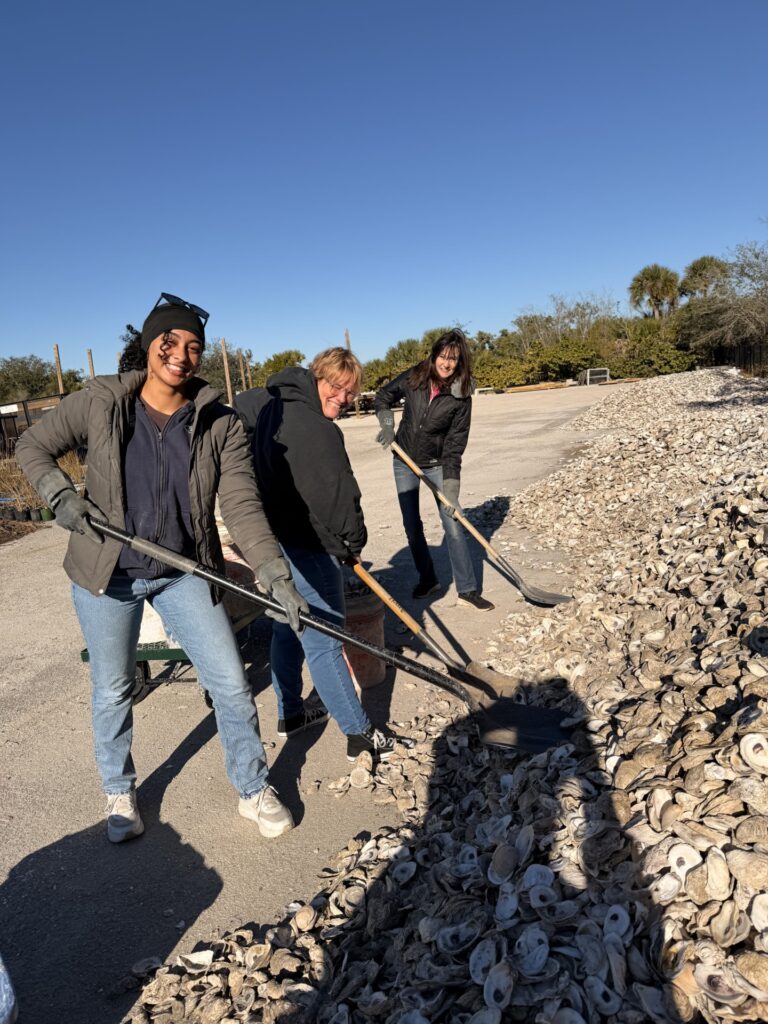
AmeriCorps has recognized MLK Day of Service for over 30 years, asking their members to serve their communities on Martin Luther King Jr Day, encouraging “a day on, not a day off.”
For more than 15 years, Habitat for Humanity Seminole-Apopka vowed that staff would serve beside their AmeriCorps members on the MLK Day of Service in recognition of Dr. Martin Luther King Jr’s legacy and the impact volunteerism has on communities. This also provides their AmeriCorps members with an opportunity to plan and coordinate a daylong event, scheduling times and reservations, and organizing any necessary preparation materials.
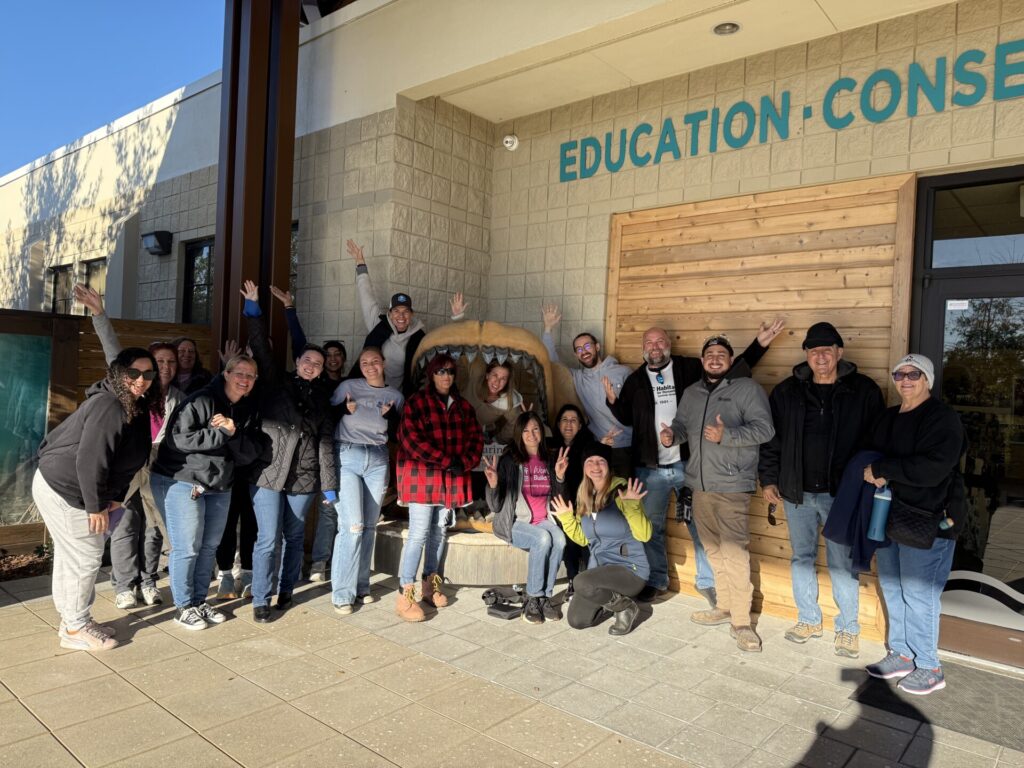
Habitat Seminole-Apopka currently has an AmeriCorps member, Lauren Rodgers, serving in their marketing department, helping with communications, storytelling, and website updates. For the service day on January 19, 2026, Lauren coordinated with the Marine Discovery Center (MDC) in New Smyrna Beach, Florida to plan for Habitat Seminole-Apopka’s staff of twenty people to help create conservation materials and maintain gardens on the Center’s property.
“Not only did the MLK Day of Service and Habitat for Humanity provide me with the opportunity to independently plan and coordinate an event, but I was also able to bring the kindhearted people I work with together to support another movement I am passionate about.”
Lauren Rodgers, Habitat for Humanity Seminole-Apopka’s AmeriCorps VISTA Member
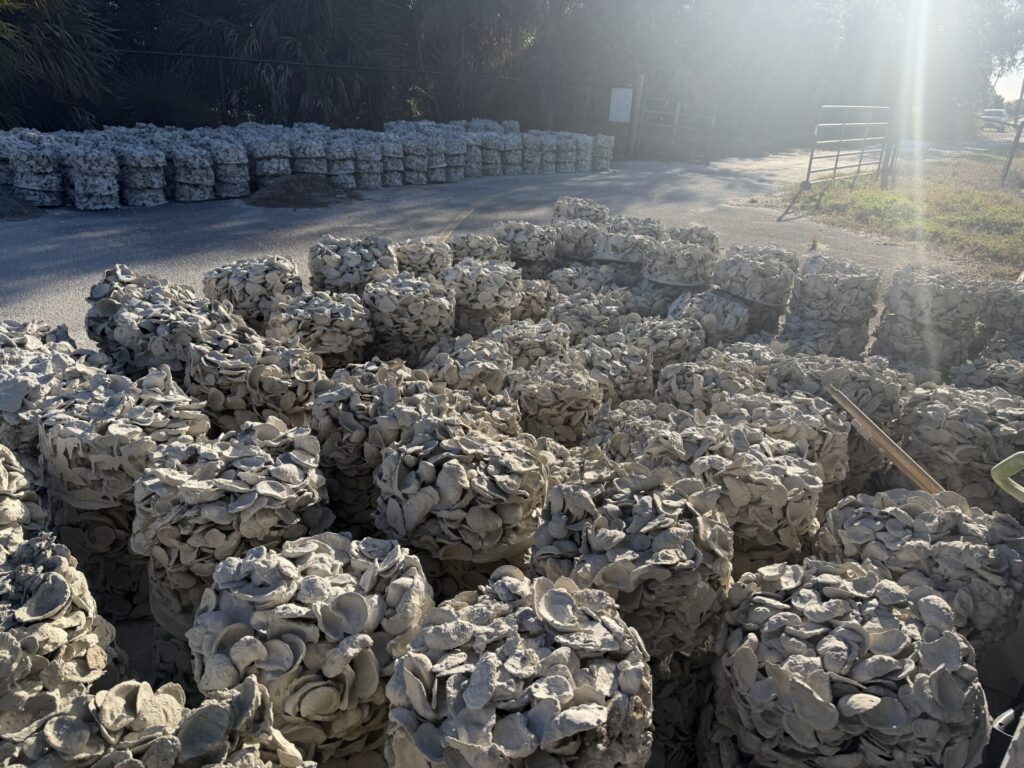
Lauren was tasked with dividing the twenty-person staff into two groups of ten, with one group working on conservation, while the other helped with property beautification. The conservation team worked with MDC’s Conservation Specialist, Abby Frey, to create Pervious Oyster Shell Habitats (POSH), which are created by mixing clean, recycled oyster shells with marine safe, pH balanced cement. The mix is then poured into a cylindrical mold and left to dry. Once set, MDC staff and volunteers place the POSH along eroded shorelines with the goal that overtime they will accrete sediment, increasing the coastal slope and allowing plant life to become established and grow.
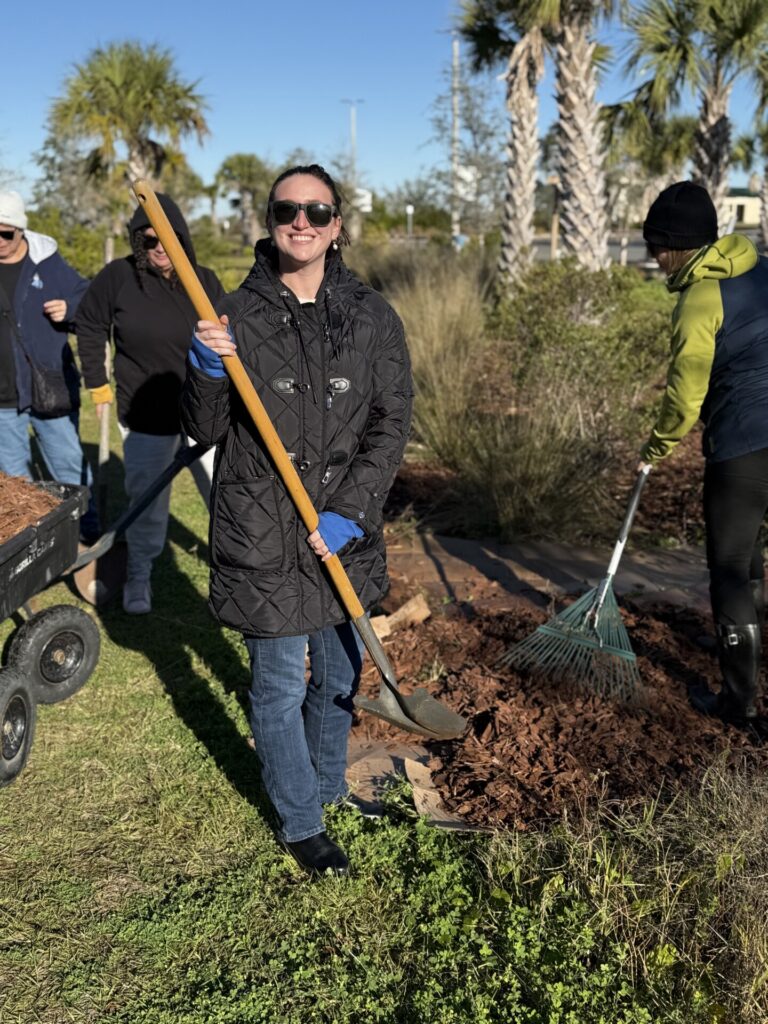
The beautification team worked with an experienced MDC volunteer to help weed native plant gardens on the property. Once the gardens were free of weeds, they laid cardboard and spread mulch on top to help deter any further weed growth. The group was able to spread “a truck load” or approximately six to eight yards of mulch around the gardens, which will help the native plant life to flourish and encourage pollinators, helping sustain local flora and fauna.

Habitat’s volunteer efforts helped the Marine Discovery Center to continue towards their goal of creating 800 POSH structures by the end of this year, which will all be used to rebuild the continuously eroding shoreline. The MDC works to monitor and restore efforts focused on rebuilding oyster reefs, living shorelines, and seagrass beds that have experienced die off. The MDC has worked with partners to create various restoration materials, including their Pervious Oyster Shell Habitats (POSH) and Cement Jute Volcanoes, which help to increase shoreline slopes over time, and their BESE Oyster Mats, which promote oyster reef growth.
When creating the materials used in restoration efforts, MDC considers five key factors: biodegradability, durability, effectiveness, community involvement, and cost. Not only do the products need to show positive results, which are determined through monitoring over time, but the materials need to be safe for environments after they break down. The products need to be able to withstand various environmental conditions such as water level fluctuations and weathering from wind and storms. Since one of MDC’s main messages is education through involvement in local environmental restoration, they consider how the products will be created and whether volunteers will be able to help with the production, as well as the cost effectiveness of the projects. These categories help the Marine Discovery Center continue to promote healthy coastal environments and protect coastal ecosystems through community education and involvement.
Service is a unifying factor in communities, bringing groups of people together in support of a purpose such as environmental conservation or affordable housing. The volunteerism and community service the MLK Day of Service represents helps nonprofits like the Marine Discovery Center and Habitat for Humanity continue to move forward with their overall missions to better their communities.
Click here to see more photos from Habitat’s service day!